Tuesday, January 11, 2011

Urgent Need for Zapatista Supporters to Spread Truth

Schools for Chiapas asks you to take a moment to help "Spread the Truth" about the recent kidnapping of a prominent right-wing Mexican politician. Despite claims of their involvement, the fact of the matter is: the Zapatistas just DIDN’T DO IT!

The Mayan communities of Chiapas and their supporters in “The Other Campaign” are being accused of kidnapping a prominent right-wing Mexican politician. An articulate denial of the kidnapping charges published in Spanish by the Zapatista movement argues that this accusation is another pretext for aggression in Chiapas. However this denial has been poorly circulated in English.

Therefore, we ask you to please forward the link below of this new English translation of the Zapatista document as broadly as possible:

http://www.schoolsforchiapas.org/english/archive/documents/1129.html

Please post this truthful word on the Internet, send it throughout the blogosphere, tweet it, text it, Xerox it, fax it, iPod it & iPad it, snail mail it, paste it to walls, send it to your local alternative media, and most importantly talk about it with your family and friends. Do whatever you can and do it TODAY!

What’s important is that everyone understand unequivocally that the Zapatistas just DIDN’T DO IT! The dangerous accusation that Zapatistas kidnapped Diego Fernandez de Cevallos compliments and deepens a significant increase in tensions throughout Chiapas.

"Schools for Chiapas" is seriously alarmed at the continuing aggressions against the autonomous, Mayan communities of Chiapas, Mexico and encourages all reasonable people to do what they can to stop the spread of these malicious, unfounded rumors and accusations.

The original Spanish language denial is published on the web page of Enlace Zapatista at:

http://enlacezapatista.ezln.org.mx/2011/01/02/se-desmiente-vinculacion-de-el-ezln-y-la-otra-campana-con-cualquier-secuestro/

The well-known center of Oventic, Caracol II, The Central Heart of the Zapatistas in Front of the World, has long been open for anyone to visit and speak with representatives of the movement. Today those representatives are in silence and preparing for new attacks against their communities.

Clearly the lies about Zapatista kidnapping which are being widely propagated in the media represent one such attack. From our personal experience with autonomous Mayan schools, we know that it is absurd to suggest that the Zapatista movement kidnapped El Jefe Diego. The accusation itself is written in a contradictory and blatantly fraudulent manner.

However the more a lie is repeated, the bigger and more powerful it becomes. Therefore, we ask you to help us stop this lie; we ask you to help us spread the truth and help protect the autonomous, indigenous communities of Chiapas, Mexico.

Por y para las niñas y los niños,

Schools for Chiapas / Escuelas para Chiapas
www.schoolsforchiapas.org
info@schoolsforchiapas.org

Friday, January 7, 2011

Los Angeles: Halt the removal of Tongva remains

UPDATE: Tongva Burial Update- Vigil Sunday 1/9/11 - The vigil will honor the people that have been disrespected, dishonored and disturbed.

Date: Sunday, January 9, 2011. Time: 10am - Until we finish praying. Location: Removal of 90+ Historic Human Burials at the La Plaza de Arte and Cultura, 501 North Main Street, Los Angeles, CA 90012. For more info: drmartin@fas.harvard.edu


The Background

“LA Plaza de Cultura y Artes at El Pueblo Historic Monument is a multi-million dollar museum dedicated to showcasing and preserving the history of Mexicans and Mexican-Americans in Los Angeles. The museum is housed within the historic Vickry-Brunswig and Plaza House Buildings next to Our Lady Queen of the Angels Church (commonly known as "La Placita")...(Molina 2011)” LA Plaza is scheduled to open on April 15, 2011 (Painter 2010). This project is the pet project of Los Angeles County Supervisor Gloria Molina, First District.

The LA Plaza (see http://www.lapca.org/) is located at 501 North Main Street, Los Angeles, CA 90012 and is within Los Angeles's first consecrated cemetery (LA Cultural Monument #26). The cemetery contains the remains of not only early Spanish and Mexican settlers but also the Native Americans to whom they were intermarried. The cemetery opened in 1822 and closed in 1844 when it was determined that the lot was too small. According to the Los Angeles Archdiocese and other documents, the remains were to have been removed and re-interred at Calvary Cemetery.

In 2004, Los Angeles County approved LA Plaza's Final Environmental Impact Report prepared to comply with the California Environmental Quality Act (CEQA). Project refinements were proposed thus an Addendum to the Final Environmental Impact Report was prepared and approved by the County on September 28, 2010 (Sapphos 2010).

The Facts

In late October of 2010 while beginning work for the Campo Santo Memorial Garden, human remains were uncovered (Painter 2010). Over 40 sets of remains were initially removed and “bagged” while trenching with a backhoe for a fountain, a fountain that is to celebrate the history of the Mexican-American people.

As remains continued to be encountered, an archaeologist was brought on-site to continue with the removal with contextual and archaeological information inadequately collected and/or destroyed. Over 90+ remains have been removed to date.

On Dec 29, 2010, an archaeologist employed by the Sanberg Group notified the Native American Heritage Commission (NAHC) of the discovery of possible Native American remains. The remains were interred with beads and a obsidian “biface” (Letter, Meyers to Hernandez, January 4, 2010). The NAHC has attempted to investigate the discovery but has yet to get a response from the responsible parties.

An informant on site stated that the project is “being rushed”, and that the rest of the remains need to be removed within ten days. This is a directive that is being given by Daniel Mendoza the on-site foreman and ultimately coming from Gloria Molina's office and the Los Angeles Archdiocese. Mr. Mendoza is acting as community contact and incidentally, also happens to be the brother-in-Law of Gloria Molina.

The Issue

Once human remains were encountered, possible descendants should have contacted in order create a plan for appropriate removal and reburial. The Los Angeles Archdiocese has a list of those that were interred at the cemetery. This did not happen.

Additionally with the discovery of possible Native American remains, the NAHC should have been contacted by the project proponent, as per the California Health and Safety Code § 7050.5, so that a Native American Most Likely Descendant could be designated. This did not happen.

The Irony
This museum is supposed to recognize and celebrate the accomplishments and contributions of the Mexican and Mexican-American communities to the development of Los Angeles. However, the fact that these early settler burials, the very people the Museum is supposed to be honoring, are being removed in secret is ironic. The excavation of this cemetery in a rushed, haphazard and unscientific way, without community involvement, is a travesty.

Additionally, the possibility that Native American remains are being removed without participation of the Gabrielino (Tongva) Nation is illegal under California law. Although the LA Plaza opening on April 15, 2011 is imminent, this is no reason to desecrate burials or inadequately document this important part of history. Not only is the Mexican and Native American pasts being destroyed, but also the past of all Los Angeles's citizens.

Mainstream News Articles on this issue:

San Diego Union Tribune:
American Indian panel: Halt downtown LA project


Los Angeles Times: State Panel Wants Halt on LA Cultural Center over Reports of Native Remains

What You Can do to Help:

Please contact the following people, offices and public entities to ask why these burials are being hurriedly removed, why the most likely descendants have not been contacted regarding the removal, why the archaeological information is not being properly documented, why those who are doing the work are not professionally trained archaeologists with experience removing human burials. Tell them if they really want to celebrate the accomplishments of the Mexican and Mexican-American people, they need to do right by the early settlers and Native American ancestors interred in the cemetery.

City of Los Angeles
Antonio Villaraigosa, Mayor
200 North Spring St.
Los Angeles, CA 90012
(213) 485-2121
Fax: (213) 978-0750
mayor@lacity.org

Gloria Molina
Los Angeles County Supervisor, First District
Hall of Administration Office
856 Kenneth Hahn Hall of Administration
500 West Temple Street
Los Angeles, CA 90012
Phone: (213) 974-4111
Fax: (213) 613-1739
gmolina@bos.lacounty.gov

LA Plaza de Cultura y Artes Foundation
Miguel Angel Corzo, President and CEO
LA Plaza de Cultura y Artes Foundation
1055 Wilshire Boulevard, Suite 800
Los Angeles, Ca 90017
(323) 260-3412

Daniel Mendoza
1055 Wilshire Boulevard, Suite 800
Los Angeles, Ca 90017
(323) 260-3412

Mexican Cultural Institute
Armando Vazquez-Ramos, Board President
Board of Directors, Mexican Cultural Institute
CSULB Chicano & Latino Studies Dept.
California-Mexico Project Director

Archdiocese of Los Angeles
Bishop Edward W. Clark
Our Lady of the Angeles Pastoral Region
3424 Wilshire Blvd.
Los Angeles, CA 90010-2202
(213) 637-7000
info@la-archdiocese.org
Bibliography

Molina, Gloria
2011 “About Gloria Molina: Biography”
http://molina.lacounty.gov/PDFs/About%20GM-BIO.pdf, accessed January
5, 2011.

Painter, Alysia Gray
2010 Plaza de Cultura y Artes Opening Set. NBC Local Media.
http://www.nbclosangeles.com/around-town/events/La-Plaza-de-Cultura-y-Artes-Opening-Set-102966004.html ,
accessed January 5, 2011.

Sapphos Environmental, Inc
2010 Addendum to the Environmental Impact Report for LA Plaza de
Cultura y Artes. http://file.lacounty.gov/bos/supdocs/56770.pdf

Tuesday, January 4, 2011

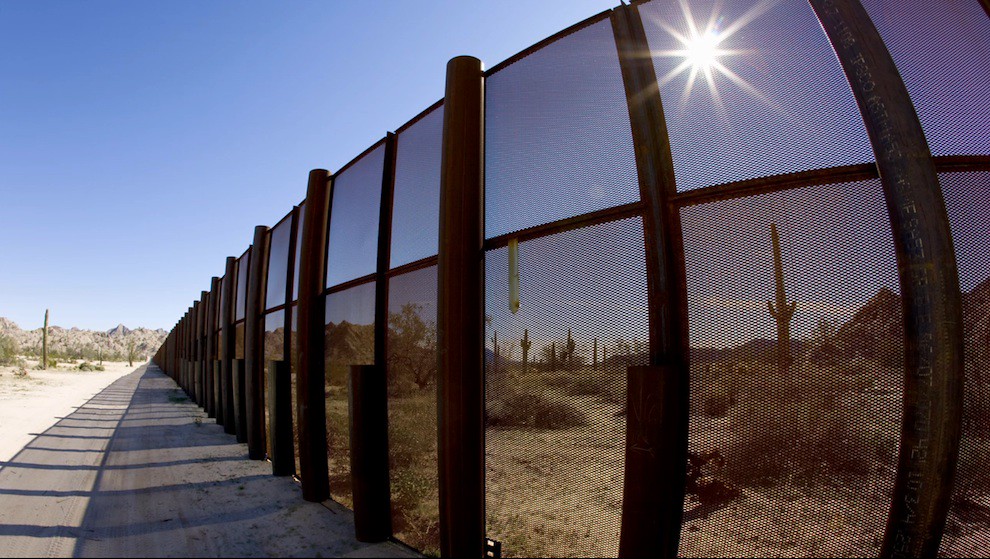
The US-Mexico Wall, it’s Borderlands, Wildlife, and People


Take a look at a 38 picture slide show demonstrating the environmental impact of the US/Mexico Border wall.


In 2005, the Department of Homeland Security was granted the authority to waive environmental laws to speed the building of a barrier between the U.S. and Mexico.

Under this waiver, more then 500 miles of wall and fence have been constructed through mostly rural and wilderness areas.

In January 2009, the International League of Conservation Photographers sent a team of world-renowned photographers, with writers, filmmakers and scientists to the borderlands of the United States and Mexico to document the wildlife, ecology, and effect of immigration and the border wall on this landscape. [38 Pictures]

Wednesday, October 13, 2010

Governments must protect quarter of world’s land to avert environmental crisis


New analysis argues for protection of 25% of planet’s land and 15% of oceans by 2020

Washington, DC – World leaders gathering in Japan next week at the UN’s biodiversity summit must agree to put at least 25 percent of the Earth’s land and 15 percent of the oceans under protection by 2020 if they are to be successful in their efforts to solve the current global environmental crisis, a new analysis by Conservation International showed today.

Putting a larger area of the planet under protection is crucial to secure important biodiversity and the delivery of vital services from nature to people. Natural habitats – and the species and genetic resources they harbor – support the global economy and billions of people who directly depend on them for immediate needs, like food, income and shelter. Currently, about 13 percent of the world’s terrestrial areas and less than 1 percent of the open oceans are protected.

The analysis shows that at least 17 percent of the Earth’s land is necessary to protect priority areas for known biodiversity and an additional 6-11 percent is needed to ensure adequate storage of carbon in natural ecosystems. The analysis clarifies that protected areas are not just strict nature reserves, but can also refer to areas managed for multiple uses, such as recreation, sustainable economic activities or for their unique beauty and cultural value.

When world leaders meet at the Convention on Biological Diversity (CBD), which starts next Monday in Nagoya, they will discuss a set of 20 targets to slow biodiversity loss over the coming decade – one of them being about the need to put areas under protection. The numbers being discussed are around 15-20 percent for land and a yet to be determined percentage for oceans.

“The current targets are clearly inadequate in protecting biodiversity and ensuring key services to people. Science shows us that we need more places to be protected and where the key places are,” said Conservation International’s Frank Larsen, lead author of the analysis. “There is also evidence that the costs of expanding protected areas are compensated by the many benefits, including new jobs and people’s ability to withstand the effects of climate change.”

Lina Barrera, Conservation International’s Director of Biodiversity and Ecosystem Services Policy, added: “The problem is that most of the costs are local, while most of the benefits are global, so politicians do not see much incentive to make things happen. This is the time to be brave and get real about the need to put us on the path for a more sustainable future.”

According to the analysis, protecting 25 percent of the lands and 15 percent of the oceans is still a preliminary and conservative estimate. It takes into account the needs to address only carbon storage, but when other important ecosystem services -- like water supply, crop pollination and fisheries -- are added, the numbers will be higher. Also, in regions highly impacted by environmental degradation, protected areas are likely to be the only intact natural environments that will remain.

###

Full document can be downloaded here: www.conservation.org/CBD

Photos available for download here (please note that these images are just to illustrate the story and do not refer to any specific places or species that might be mentioned in the analysis): http://bit.ly/daZXNO

For more information:

Patricia Yakabe Malentaqui, International Media Manager
Mobile: +1 (571) 225-8345 / Office: +1 (703) 341-2471
pmalentaqui@conservation.org

Kim McCabe, U.S. Media Manager
Mobile: +1 (202)203-9927 / Office: +1 (703) 341-2546
kmccabe@conservation.org

Frank Larsen, Conservation Scientist
flarsen@conservation.org

Lina Barrera, Director of Biodiversity and Ecosystem Services Policy
lbarrera@conservation.org

Conrad Savy, Biodiversity Analyst
csavy@conservation.org

Notes for editors:
Conservation International (CI): Building upon a strong foundation of science, partnership and field demonstration, CI empowers societies to responsibly and sustainably care for nature, our global biodiversity, for the well-being of humanity. With headquarters in Washington, DC, CI works in more than 40 countries on four continents. For more information please visit www.conservation.org

Thursday, October 7, 2010

California condor population hits 100


California condor population hits 100

October 6, 2010 | 6:12 pm

The number of wild, free-flying condors in California has reached 100, the most in half a century.

The U.S. Fish & Wildlife Service announced the landmark Wednesday, crediting a captive breeding program started in Southern California in 1982, when there were only 22 wild condors in the state.

Young condors born in captivity are released into the wild every fall at Pinnacles National Monument in Central California and Bitter Creek National Wildlife Refuge on the southwest side of the San Joaquin Valley. The flock will get another bump over the next few months with the release of 11 juveniles.

The big birds are also reproducing on their own in the wild, adding 16 young to the California population since 2004.

The carrion-eating birds, known for their huge wingspan (9.5 feet) and memorable visage, soared from Mexico to Canada at the time of settlement. Their numbers plummeted with loss of habitat and the decline of the large mammal populations they fed on. More recently, lead poisoning from ammunition and the ingestion of bits of trash have taken a toll.

Arizona, Utah and Baja Mexico also have wild populations. But even when captive birds are counted, there are fewer than 400 California condors in the world.

--Bettina Boxall