Friday, September 28, 2012

Resort’s Snow Won’t Be Pure This Year; It’ll Be Sewage

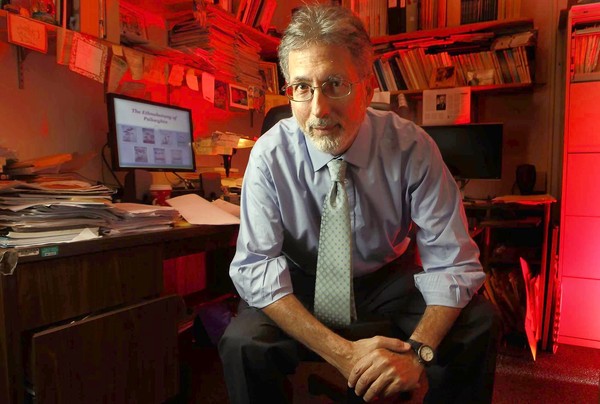
Klee Benally
FLAGSTAFF, Ariz. — Klee Benally, a member of the Navajo tribe, has gone to the mountains just north of here to pray, and he has gone to get arrested. He has chained himself to excavators; he has faced down bulldozers. For 10 years, the soft-spoken activist has fought a ski resort’s expansion plans in the San Francisco Peaks that include clear-cutting 74 acres of forest and piping treated sewage effluent onto a mountain to make snow. 

But he appears to be losing the battle. 

In February, a federal appeals court ruled in favor of the ski resort’s upgrade plans, ending a legal saga fought by a coalition of environmental groups and 13 American Indian tribes, which consider the mountain sacred and view the wastewater snow as a desecration. 

This coming ski season, the resort, Arizona Snowbowl, will become the first ski resort in the world to use 100 percent sewage effluent to make artificial snow. 

“It’s a disaster, culturally and environmentally,” said Taylor McKinnon of the Center for Biological Diversity, one of the plaintiffs. He worries about the impact on the delicate alpine tundra and to human health should skiers fall into the treated sewer-water snow and ingest it. 

The United States Forest Service, which owns the land where the resort is, says the treated water meets the highest standards — just below drinking water — and is already used to irrigate golf courses, soccer fields and parks, according to Corbin Newman, a regional forester. 

“Snow-making has become necessary because of climate change,” he said. It allows for a more consistent ski season, bringing money into neighboring Flagstaff, which contracted to sell Snowbowl the water from its sewage treatment plant. 

The dispute runs deeper than water. It has erupted into protests, hunger strikes and multiple arrests and has become a political jostling point for Senator John McCain of Arizona and the Obama administration. At one point Snowbowl’s owner, Eric Borowsky, declared that if the resort lost its legal bid to make snow, “radical groups would achieve their ultimate goal of control of our nation’s resources.” 

Indeed, the battle has put this picturesque city, about an hour southeast of the Grand Canyon, on the frontier of what many say is the new war for the West’s public lands. It does not involve ranchers, miners or loggers, but centers on the burgeoning outdoor recreation industry, which some say is expanding at the expense of the environment. 

Half of all alpine ski areas in the United States, including the big names of Vail, Aspen and Lake Tahoe, are on public land, and many of them are faced with the choice of expanding or going out of business. “A ski resort, to remain competitive, has to hit certain dates. They have to guarantee they’ll be open by Thanksgiving, Christmas at the latest,” said Jim Bedwell, director of the Forest Service’s Recreation and Heritage Resources. 

“Everyone does well when the ski area does well,” said J. R. Murray, general manager of Snowbowl.
But Indians, who pray and hold ceremonies on the mountain, feel their concerns are too easily swept aside. “Our culture can still be reduced to something that is less important than the profit margin on a ski resort,” Mr. Benally said. “That’s a very, very hard place to be in.” 

The wastewater snow, Indians say, will ruin a mountain they consider sacred ground as well as the ecosystem, a concern shared by environmental groups. When it melts, it “could degrade water quality of the aquifers,” said Rob Smith, regional staff director at the Sierra Club. 

City officials, like Brad Hill, Flagstaff’s utilities director, say they have been “very proactive” in ensuring that the water is safe. That is why, in addition to the federal study, the city conducted its own water tests. 

It hired Catherine R. Propper, a scientist and professor at Northern Arizona University, who found that Flagstaff’s water contains endocrine-disrupting chemicals, or EDCs, including hormones, antibiotics, antidepressants, pharmaceuticals and steroids. 

“We don’t know what effect freezing and thawing is going to have on the chemical compounds,” she said. “We don’t know what UV is going to do to them. Some of the compounds will bind to the soil; some will get into the aquifers. It is a very complicated system that we know very little about.”
The substances were not considered in the Forest Service’s impact assessment because federal guidelines do not require doing so, and their nonstatus is part of why Flagstaff can consider its water safe despite Dr. Propper’s findings. Even she is quick to say that “a mouthful of snow is not going to make the difference.” 

The Environmental Protection Agency says it is studying the chemicals, and Flagstaff and Snowbowl both say that if they become regulated, the city “will scale treatment to come into compliance,” according to Kevin Burke, city manager. 

“It’s an Old West mentality: let’s go forward and assess the damage later,” said Mr. Benally, referring to the unregulated mining that went on for decades and left a legacy of environmental degradation. That reality is particularly acute on the sprawling Navajo Indian reservation bordering Flagstaff, where Mr. Benally grew up. Forty percent of the population there does not have indoor plumbing; one out of three does not have access to clean drinking water. 

For now, Flagstaff business owners are gearing up for the ski season, hoping the fake snow will “generate as much as $35 million for the local economy during the winter,” said Julie Pastrick of the Flagstaff Chamber of Commerce. 

Asked whether he thinks the protests will continue, Mr. Murray, the Snowbowl manager, expressed a certain weariness with the controversy, saying, “I have no idea.”
Mr. Benally is undeterred. “It’s not over,” he said. “Until the Obama administration addresses the issue, we will continue to lay bodies in front of Snowbowl’s machinery.”

Friday, May 25, 2012

Interview: Daniele Bolelli, Author of 50 Things You’re Not Supposed to Know: Religion

Hello everyone.

Check out this great book my friend Daniele Bolelli wrote on religion.  You all will love it!  The interview below was published in Wired Magazine in January but I'm re-posting it now to keep interest in the book circulating.

Daniele is also the author of On the Warrior's Path, Second Edition: Philosophy, Fighting, and Martial Arts Mythology.

If anyone is interested, there is also a free article by Daniele online.  The piece is called "The Shrine of Hypocrisy" and is about how the Lakota people view Mt. Rushmore.  It also deals with land claims in the Black Hills.  You can view it here:  THE SHRINE OF HYPOCRISY: THE MEANING OF MOUNT RUSHMORE FOR THE LAKOTA PEOPLE


You can buy any of his books on Amazon!

Enjoy - Jeff Hendricks

Interview: Daniele Bolelli, Author of 50 Things You’re Not Supposed to Know: Religion

By Tony Sims
Wired Magazine


I recently received a copy of the book 50 Things You’re Not Supposed to Know: Religion as a gift from a friend. It looked like a neat little book – actual size is about a 5″x5″ square – so I thought I would browse through it and put it on the table with the magazines. I started reading through it and was hooked. This entertaining and educational book will have you looking at many different religions with different eyes.

Certainly some ideas in this book are controversial, but that is what makes it great. It gets you thinking about seemingly taboo subjects in a different light. I live in the “Bible Belt,” smack in the middle of Mississippi, and people here have very strong beliefs. This little book gives some great ideas for conversation starters with people of any religion that anyone with an open mind can appreciate.

I also had a chance to talk with the author Daniele Bolelli, who has written several books, is a college professor and a martial artist:

Sims: Tell me a little bit about 50 Things You Aren’t Supposed to Know: Religion. Why are we not supposed to know these things?

Bolelli: Because if you knew them already, you wouldn’t buy my book! Some of the topics are stories having to do with religion that may be relatively unknown but are either very fascinating or oddly funny. Others chapters focus on topics that may be better known but are shown under a new light. For example, everyone has heard about Moses and the Ten Commandments, but if someone were to ask you who masterminded the death of 3,000 civilians in the name of his religious beliefs, Moses would not be the first name that comes to mind. And yet, according to the Old Testament, that’s exactly what he did shortly after receiving the Ten Commandments.
Sims: You’re a martial artist and a religion scholar. How do these things go together?

Bolelli: Many people love indulging in the very unhealthy habit of devoting their lives to one thing and one thing only. This makes for very boring human beings. Life is greater and much more interesting than any one specific field. Tasting life in all of its weirdness, beauty and complexity requires us to be more than one thing.

Sims: Religion is a touchy subject. Why did you go into teaching in this area?

Bolelli: Because it’s a touchy subject! People live and die in the name of their religious beliefs, so it’s essential to play with such key topics. Ultimately, we all have to decide where we stand on these issues. Much of everything else in life depends on the answers we embrace or don’t embrace about religion.

Sims: What’s your own religious background? Were you influenced by your father? He’s a philosopher, right?

Bolelli: Neither one of my parents belonged to any religious group. Since it’s the headquarter of the Catholic church, Italy has seen a horrendous amount of bloodshed in the name of religion over the centuries. This has left many people less than enthusiastic about anything having to do with organized religion. So I grew up in a fairly atheist/agnostic environment.

Sims: You’re from Milan. What brought you to America?

Bolelli: Italy is fun if you are on vacation. If you want to get anything done, though, it’s the wrong place. It’s old, slow and hostile to any innovation. The way most people automatically respond to any new idea is cynicism.

Sims: You’re a dad. How will you handle your own child’s introduction to religion? Are you raising her a certain way? Will she be free to choose her own path?

Bolelli: I don’t know if I’d call the occasionally dropping and decapitating by mistake statues of Buddha and Ganesh an introduction to religion. Other than that, I’ll encourage her to question everything while at the same time keeping an open mind. It’s her life, so no one else should choose for her.

Sims: Do children have any sort of instinct to religion or is it all social indoctrination?

Bolelli: Since an early age people want answers to questions that are unanswerable. Social indoctrination at this point comes in with pre-cooked religious answers to soothe the craving at the roots of those questions.

Sims: Another question about your martial arts background: I Googled you and found that your nickname was “The Drunken Taoist.” What does that mean?

Bolelli: The long answer is: a training partner mentioned how my approach to fighting is like that of the old, drunken guy who often shows up in kung fu flicks. He usually will run into a tough, muscular, young challenger whose skills look amazing. The drunken guy looks like he can barely stand. But before anyone can understand what happened, the challenger is on the floor, out cold. My style doesn’t look all that impressive but I can often nullify the strengths of opponents who normally look flashy and much better than me. And no one understands how it happened. The short answer is that I like wine and Taoism.

Sims: What are you reading currently – assuming it is not your own book?

Bolelli: I just re-read “Common Sense” by Thomas Paine, and I am reading everything by Don Winslow I can get my hands on.

Sims: What is your next project?

Bolelli: I have four different books I am toying with right now. Let’s see which one is going to get the green light first.

To get your copy, visit Amazon.com


Friday, April 6, 2012

The Environmental Costs of Solar Power

THE SOLAR DESERT

Environmentalists feeling burned by rush to build solar projects

Local activists say national groups, focused on renewable energy, ignore projects' threat to the Mojave.

By Julie Cart, Los Angeles Times

April 6, 2012


AMARGOSA VALLEY, Calif. — April Sall gazed out at the Mojave Desert flashing past the car window and unreeled a story of frustration and backroom dealings.

Her small California group, the Wildlands Conservancy, wanted to preserve 600,000 acres of the Mojave. The group raised $45 million, bought the land and deeded it to the federal government.

The conservancy intended that the land be protected forever. Instead, 12 years after accepting the largest land gift in American history, the federal government is on the verge of opening 50,000 acres of that bequest to solar development.

Even worse, in Sall's view, the nation's largest environmental organizations are scarcely voicing opposition. Their silence leaves the conservancy and a smattering of other small environmental organizations nearly alone in opposing energy development across 33,000 square miles of desert land.

"We got dragged into this because the big groups were standing on the sidelines and we were watching this big conservation legacy practically go under a bulldozer," said Sall, the organization's conservation director. "We said, 'We can't be silent anymore.' "

Similar stories can be heard across the desert Southwest. Small environmental groups are fighting utility-scale solar projects without the support of what they refer to as "Gang Green," the nation's big environmental players.

Local activists accuse the Sierra Club, the Natural Resources Defense Council, Defenders of Wildlife, the Wilderness Society and other venerable environmental groups of acquiescing to the industrialization of the desert because they believe large-scale solar power is essential to slowing climate change.

Janine Blaeloch, director of the Western Lands Project, a small public lands watchdog group, said Gang Green's members are compliant in order to make themselves more inviting to major foundations. In recent years, grants for projects focusing on climate change and energy have become the two top-funded issues in environmental philanthropy. Foundations have awarded tens of millions of dollars in grants to environmental groups that make renewable energy a top priority.

"It's not that they solely and directly make decisions based on funding, but they keep their eyes open to what foundations want," Blaeloch said.

As a result, "you've got enviros exactly where industry wanted them to be," she said.

Big environmental organizations say they have agonized over how to approach the issue. They acknowledge that development can have irreversible effects on ecosystems. But they are reluctant to stand in the way of renewable energy projects they regard as a vital response to climate change, which they consider the nation's most serious environmental challenge.

The Sierra Club, NRDC and Defenders of Wildlife filed suit last week to stop the troubled Calico solar project northeast of Los Angeles. But for the most part the big players have embraced solar development.

Instead of following the old adversarial formula of saying no to everything, they have adopted an approach they call, "Getting to yes."

'Green halo' effect

Grass-roots groups say that strategy has failed to protect the desert. What's worse, they say, is that the imprimatur of such groups as the Sierra Club has provided a '"green halo" to energy companies and the government — making it easy for them to ignore local environmental concerns.

Two major projects underway in the Mojave illustrate the divide between local and national groups.

Desert activists vigorously oppose the BrightSource Energy project in the east Mojave's Ivanpah Valley and NextEra's Genesis solar plant 20 miles west of Blythe. National groups have not mounted a strong challenge to either project.

When BrightSource was planning the Ivanpah installation, the big environmental players urged the firm to move the bulk of the project closer to Interstate 5 to avoid prime habitat for the desert tortoise, a protected species. The company responded by reducing its total footprint by 12%, which didn't solve the problem.

After construction began, large numbers of desert tortoises were discovered. According to federal biologists, BrightSource is now responsible for relocating and caring for 95% of all the tortoises expected to be found on all solar project sites in the Mojave.

Some rank-and-file Sierra Club members had wanted to sue to stop the project altogether, but the group's national board of directors vetoed that proposal in favor of a more neutral approach.

Separately, the Sierra Club has scolded some in the Southern California desert chapters for opposing solar projects. The national office issued a 42-page directive laying out the organization's policy regarding renewable energy and instructed local chapters to fall in line.

"It was pretty clear that the national club policy was to foster large-scale solar," said longtime Sierra Club member Joan Taylor. "I don't know how many times I've heard that building solar in the desert is going to save the world."

The NRDC's involvement at Ivanpah was constrained by a conflict of interest: NRDC senior attorneyRobert F. KennedyJr. is a BrightSource investor.

Abandonment urged

On the Genesis project, the Sierra Club and others met with NextEra executives and urged the company to abandon its plans for the site out of concern that

it is too close to a wilderness area. In addition, local groups warned the developer that the site contained sensitive cultural resources.

The project went ahead, only to become embroiled in controversy over the discovery of Native American cultural artifacts that halted construction on one-fifth of the site.

The Interior Department's plan to open a vast swath of desert to solar energy is another instance local activists say demonstrates the ineffectiveness of Big Green's approach.

In late 2010, environmental groups worked with energy companies and the government on a policy that restricted development to 677,000 acres in designated solar zones. Environmentalists left the table believing Interior would refine the agreement to even further reduce the land open to development.

Instead, not long after that compromise, Interior said 21 million acres would be available for development through a variance process, a change that no one in the environmental community supported. If the plan is approved as expected, the nation's leading environmental groups will have been outflanked by solar developers.

"The Sierra Club and the NRDC — their mission is to work on climate change" above all else, Sall said. "We refuse to compromise on that level."

The smaller groups have formed their own alliance, Solar Done Right, that supports renewable energy in previously disturbed or low-conflict lands. "We can have renewable energy — we can have tons of it — and we can do it in all the right ways," Sall said.

The Sierra Club's Barbara Boyle, senior lead for energy issues, said she understands the frustration of smaller groups. "I can appreciate that it doesn't seem that we have gotten what we want out of the process yet," she said.

Asked if the big players had been outmaneuvered by solar developers, Boyle said, "That's always possible."

But she said her 30 years of working for environmental causes have taught her that "the way that we win is through incremental progress."

"I have faith that we are going to get this right in the end," Boyle said. "We have made some mistakes, and that's really difficult. But it's not just any kind of development that we are working on here. We feel the urgency of getting as much renewable energy in California as soon as we can."

Leading environmental organizations fiercely dispute suggestions that they are influenced by major donors. But on solar development, they are fending off perceptions.

'Big Solar' proposal

Four years ago, the director of the Center for Energy Efficiency and Renewable Technologies in Sacramento wrote a document called "Big Solar." The proposal by V. John White was a pitch for solar developers to hire his company to help roll out projects.

White is a former lobbyist for the Sierra Club and the NRDC. He also lobbies and consults for energy companies.

White wrote that developers could get cooperation from environmental groups by creating a $500,000 grant-making fund. The money

ostensibly was for campaigns to tout the virtues of solar power, but the implication was unmistakable:

Give money to co-opt Big Green.

In the memo, White singled out two organizations — the Sierra Club and the NRDC — for grants. White says the fund was never created. But the strategy, coming from a former environmental lobbyist, raised the antennae of critics and invited scrutiny of funding sources.

The Energy Foundation is among the major funders of environmental groups today. It receives its money from large endowments, although not from the energy industry, and makes grants to further the goal of renewable energy. Over the last five years, the foundation has made $150 million in grants for renewable energy efforts, including $8.5 million to the NRDC and $6.2 million to the Sierra Club.

The Sierra Club's zeal to eliminate coal-fired power plants led it to praise natural gas as an acceptable "bridge fuel." Club officials rewrote their gift acceptance policy when it was discovered that from 2007 to 2010 the organization accepted $26 million from individuals with or subsidiaries of Chesapeake Energy, one of the country's largest natural gas companies.

At the NRDC, public lands attorney Johanna Wald bristled at the suggestion that she or the organization has taken it easy on solar projects in return for grant money.

"It's ridiculous," Wald said. "I'm working around the clock on these issues. I couldn't be bought off, I haven't been bought off and I won't be bought off."

White has become something of a kingmaker in California on renewable energy, deciding who will represent environmental interests on various planning groups overseeing renewable energy development.

Every appointee he has chosen came from a major environmental group that supports most solar development.

As insiders in the process, Gang Green has framed the issues, Sall said, "basically saying we have to pave over huge areas of the West with solar or we are all going to burn up with climate change."

"That set a tone that we still have not overcome."

julie.cart@latimes.com

Los Angeles Times researcher Maloy Moore contributed to this report.

Wednesday, March 21, 2012

How the FBI Monitored Crusty Punks, ‘Anarchist Hangouts,’ and an Organic Farmers’ Market Under the Guise of Combating Terrorism

By John Cook,

Gawker Magazine


The FBI conducted a three-year investigation, dubbed "Seizing Thunder," into a animal-rights and environmental "terrorists" in the Pacific Northwest that devolved into widespread—and seemingly pointless—surveillance of activists for no apparent reason aside from the fact that they were anarchists, or protested the war in Iraq, or were "militant feminists." Here's the file.

I first came across the name "Seizing Thunder" several years ago while rifling through the FBI's investigative files on the Animal Liberation Front. The ALF records obliquely referenced the evocatively named investigation, which I requested via the Freedom of Information Act just for kicks. Last month—after three years—the FBI returned nearly 500 pages (it held back 784).

It turns out that Seizing Thunder, which was based out of the bureau's Portland field office, was one of several investigations into animal rights and environmental activists nationwide that the FBI eventually merged into Operation Backfire, a wide-ranging probe of ALF and the Earth Liberation Front. Backfire concluded in 2006 with the indictments of 11 activists for arson and other "acts of domestic terrorism," including a notorious 1998 destruction of a $12 million ski lodge in Vail, Colo. The Portland portion seemed to focus primarily on gathering general intelligence on activists who used tree-sitting and other monkey-wrench tactics to fight old-growth logging in the Pacific Northwest.

How the FBI Monitored Crusty Punks, 'Anarchist Hangouts,' and an Organic Farmers' Market Under the Guise of Combating TerrorismClick to expand

What makes Seizing Thunder interesting, however, is how easily the agents slipped beyond investigating actual federal crimes and devoted considerable resources to tracking political activists with no apparent criminal intent.

Seizing Thunder was opened in 2002 to target members of the "Animal Liberation front (ALF), Earth Liberation Front (ELF) and an anarchist group called the Red Cloud Thunder, all whose members are inter-related and they openly claimed several major arsons," according to the files. The investigation involved physical and video surveillance, warrants for phone taps, and cooperation with local police departments in Portland and Eugene, Ore. But the feds quickly dropped the pretense of tracking organized groups and quickly began surveilling people simply for identifying themselves—or for being identified by informants—as anarchists. The memos read like artifacts from the Red Scare:

  • July 19, 2002: "On [redacted], the source observed a [redacted] Oregon license plate...parked at [redacted], a known anarchist hangout."
  • August 8, 2002: "The source observed the following vehicles in the vicinity of [redacted], a major hangout for the anarchist and [redacted]"
  • September 19, 2002: "On [redacted] the source observed [redacted] vehicle, Oregon license plate [redacted] parked at [redacted] one of the hangout for anarchist...."
  • October 18, 2002: "On [redacted] the source was questioned as to the [redacted] anarchist travelling to [redacted]."

"The anarchists were dressed in black"

What sort of federal crimes were all these anarchists getting up to, aside from the thought variety? The records, which document the FBI's extensive cooperation and intelligence-sharing with local police departments in Eugene and Oregon, show that agents collected intelligence about an anarchist march that was being planned to protest U.S. policy in the Middle East:

On [redacted] at approximately 2:30 p.m., the source visited [redacted]. The source did not observe any anarchists. The source walked [redacted] to view their bulletin board. Most of the ads on the bulletin board were for individuals looking for roommates.

On [redacted] the source attended [redacted]. The source visited [redacted] where the source met two unknown anarchists at [redacted]. The anarchists were dressed in black and were in their early 20s.... The source stated the anarchists are planning a protest to "Reclaim the Streets" on April 20, 2002, in Portland, Ore.

Here's how the Associated Press covered that crucible of terror and violence:

About 700 people marched through downtown Saturday in a peaceful protest against U.S. support of Israel in the Middle East crisis. There were no arrests and no altercations, police said.

The Pinky Swear Riot

Another FBI source passed along a warning of a similar anarchist plot to gather on the streets of Eugene just two days later to protest the International Monetary Fund. The feds quickly passed along the warning to the Eugene police department, thereby averting a bloody riot, by the FBI's lights:

[Redacted] identified [redacted] a mass protest/riot planned by the Eugene anarchist where on 4/22/02 they attempted to "take over the street" and cause havoc during the rush hour. The Eugene Police Department was immediately notified and they called in numerous officers for this unexpected protest/riot. EPD was prepared for this problem and prevented a major riot. EPD expressed their appreciation for this information as it may have resulted in maJor damages of businesses and property, similar to that of a riot in June 1999 where $150,000 of property destruction occurred.

I can't find any record of any news organization covering this narrowly averted riot. A flier for the riot included in the file reads: "2 p.m.: Teach-in on the G8.... 4 p.m.: RECLAIM-THE-STREETS! Come and party in the street! Live bands: Pinky Swear (Portland/Punk) and Elevated Elements (Seattle / Hip Hop)."

Chasing Subarus

Another high point of the file shows agents conducting surveillance on the Grower's Market, a "not-for-profit food-buying club for buying organic and natural foods" in Eugene, and then literally tailing two random Subaru Legacys (naturally!) to a political rally. As the redacted memo recounting the excursion makes clear, the agents had no idea who they were following, or why.

The interviewing agents conducted a physical surveillance in the vicinity of The Grower's Market located at 454 Willamette Street in Eugene, Oregon. This surveillance was conducted as a result of [redacted]. During the surveillance the following observations were made:

0930: Surveillance instituted in the vicinity of The Grower's Market....
1100: A gray Subaru Legacy bearing Oregon license plate [redacted] with unknown individuals left the area of the Grower's Market followed by unknown passengers in a red Subaru Legacy bearing Ohio license plate [redacted], a purple Geo Metro bearing an Oregon special license plate [redacted]. These vehicles were followed south on Interstate-5.

What caper were these Subaru-driving terrorists getting up to? Well, after meeting up with a "private bus," also with unknown individuals on board, they drove to Roseburg, Oregon:

1406: The bus and three vehicles were observed parked on the west side of Main Street, south of Oak Street, in a free parking area. The occupants of the vehicles were observed to be carrying protest signs and musical instruments and walking north on Main Street toward the South Umpqua National Bank.
1409: The occupants of the bus and three vehicles were observed protesting outside the South Umpqua National Bank located at Main and Washington streets in Roseburg, Oregon. Officers from Roseburg Police Department and the Douglas County Sheriff's Office were observed monitoring/video taping the incident.
1417: Surveillance discontinued.

"The Anarchists and homeless groups have united"

The Seizing Thunder agents weren't just worried about enviro-anarchy—they also warned of a dreaded anarchist-homeless alliance that threatened to build a "homeless camp." From a November 2002 memo:

Source advised that the Anarchists and homeless groups have united in the effort to establish a "homeless camp." Source stated that the homeless community has accepted the assistance of the Anarchists in the area of publicity and community outreach.

And don't forget the menace posed by punk rock as performed by anarchists. This memo shows that the bureau's Los Angeles office kept tabs on an the Alternative Gathering Collective, "an anarchist group in Los Angeles that organizes anarchist punk music concerts, many of which are fundraisers for animal liberation and environmental extremist groups and causes."

Review of [redacted] found that the AGC sponsored a benefit show for the Long Beach Food Not Bombs (FNB) on 2/5/2005. The concert was held at the Homeland Cultural Center, 1321 Anaheim St., Long Beach CA with the bands Sin Remedio, Ciril, Degrading Humanity, Life in Exile, Lechuza, Civil Disgust, S.O.U.P., and One Side Society.

Finally, an October 2002 memo warns agents that Lady Anarchists can be a whole mess of trouble:

Source advised that the females of the anarchist's movement are in leadership positions in Eugene, Oregon. These females are described as being very feminist and militant.

Other hilarious moments involve agents snooping on nature hikes, investigating the serious federal crime of keying cars, and unwittingly letting a warrant for a phone tap expire.

A History of Political Surveillance

Sadly, it shouldn't come as a surprise to anybody paying attention that the FBI spent much of the 2000s following people simply because they harbored forbidden political beliefs. Last year, Austin, Texas activist Scott Crow decided to see if the FBI was keeping tabs on him, so he FOIAed his file. He got back an astonishing 440 pages of surveillance records and other documents, according to the New York Times. Crow, an anarchist, has never been charged with a federal crime.

In 2010, the FBI's inspector general issued a report finding that the bureau had overstepped its bounds in investigating political and advocacy groups. The bureau's Pittsburgh office, the report said, had conducted surveillance on an anti-war rally as a "make-work" assignment for a bored agent and then "provided inaccurate and misleading information to Congress and the public" about the incident. It also found that "in several cases" of surveillance aimed at Greenpeace, People for the Ethical Treatment of Animals, and other groups, the FBI's stated bases for the investigations were "factually weak" and demonstrated "little indication of any possible federal crime as opposed to a local crime."

A 2003 inspector general audit of the bureau's intelligence gathering and sharing capabilities took note of the increasing emphasis on domestic counterterrorism investigations aimed at "criminal activities associated with animal rights, environmental, and anti-abortion extremists, as well as by certain social protestors" as opposed to, you know, al Qaeda. The report diplomatically suggested that the FBI's counterterror resources should be reserved for combating actual terrorism: "To the extent that the FBI seeks to maximize its counterterrorism resources to deal with radical Islamic fundamentalist terrorism, WMD, and domestic groups or individuals that may seek mass casualties, we believe that FBI management should consider the benefit of transferring responsibility for criminal activity by social activists to the FBI's Criminal Investigative Division."

The bureau obviously didn't listen. It should be noted that the 11 people eventually indicted in Operation Backfire actually had committed serious crimes worthy of federal investigations. Though the documents are heavily redacted, it appears from context that at the very least one of them—Chelsea Dawn Gerlach, who participated in the Vail arson—was a target of Seizing Thunder.

I asked the FBI who, if anyone, was eventually charged based on information developed via Seizing Thunder, and what federal crimes the bureau suspected unidentified Subaru drivers, militant feminists, and frequenters of "anarchist hangouts" of committing. A spokeswoman did not immediately respond.

You can read the full file here: Seizing Thunder Combined FBI Files


Wednesday, December 21, 2011

65 Anracho-Punks Sent to Re-Education Camp in Banda Ache

Indonesia Punk Crackdown Leaves Youths Unchanged

SEULAWAH, Indonesia -- Mohawks buzzed and noses free of piercings, dozens of youths march in military-style for hours beneath Indonesia's tropical sun – part of efforts by authorities to restore moral values and bring the "deviants" back into the mainstream.

But the young men and women have shown no signs of bending.

When commanders turn their backs, the shouts ring out: "Punk will never die!" Fists are thrown in the air and peace signs flashed. A few have managed briefly to escape, heads held high as they are dragged back.

Sixty-five young punk rockers arrived at this police detention center last week after baton-weiling police crashed a concert in Aceh – the only province in this predominantly Muslim nation of 240 million to have imposed Islamic laws.

They will be released Friday, after having completed 10 days of "rehabilitation," from classes on good behavior and religion to military-style drills aimed at instilling discipline.

Nineteen-year-old Yudi, who goes by only one name, says it's not working.

He tried unsuccessfully to shake off police when they took an electric razer to his spiky mohawk. At the sight of his hair scattered in the grass, he recalls, tears rolled down his face.

"It was torture to me."

"I can't wait to get out of here," he added. "They can't change me. I love punk. I don't feel guilty about my lifestyle. Why should I? There's nothing wrong with it."

His girlfriend, 20-year-old Intan Natalia, agrees.

Her bleach-blond hair has been cut to a bob and dyed black and she's been forced to wear a Muslim headscarf.

"They can say what they want, but I like life as a punk," she says. "It suits me."

Two young men hated it so much at the detention center, they tried to escape.

They almost succeeded, pretending they had to go to the bathroom, then fleeing to the provincial capital, Banda Aceh, 30 miles (50 kilometers) away.

Police found them strolling the streets nine hours later and brought them back.

It was just after midnight.

"They said they missed their parents, but it's pretty clear they were lying," said local police chief Col. Armensyah Thay. "They didn't go home. How could they? They've been living on the streets."

The crackdown marked the latest effort by authorities to promote strict moral values in Aceh, which, unlike other provinces in the sprawling archipelagic nation, enjoys semiautonomy from the central government.

That was part of a peace deal negotiated after the 2004 tsunami off Aceh convinced separatist rebels and the army to lay down their arms, with both sides saying they didn't want to add to people's suffering.

More than 230,000 people were killed in the towering wave, three quarters of them in Aceh.

Thursday, December 8, 2011

DA dropping death penalty against Abu-Jamal

Written by KATHY MATHESON

Wednesday, 07 December 2011

PHILADELPHIA — Prosecutors on Wednesday abandoned their 30-year push to execute convicted cop-killer Mumia Abu-Jamal, the former Black Panther whose claim that he was the victim of a racist legal system made him an international cause celebre.

Abu-Jamal, 58, will instead spend the rest of his life in prison.

Flanked by police Officer Daniel Faulkner's widow, Philadelphia District Attorney Seth Williams announced his decision two days short of the 30th anniversary of the white patrolman's killing.

He said that continuing to seek the death penalty could lead to "an unknowable number of years" of appeals, and that some witnesses have died or are unavailable after nearly three decades.

"There's never been any doubt in my mind that Mumia Abu-Jamal shot and killed Officer Faulkner. I believe that the appropriate sentence was handed down by a jury of his peers in 1982," said Williams, the city's first black district attorney. "While Abu-Jamal will no longer be facing the death penalty, he will remain behind bars for the rest of his life, and that is where he belongs."

Abu-Jamal was originally sentenced to death. His murder conviction was upheld through years of appeals. But in 2008, a federal appeals court ordered a new sentencing hearing on the grounds that the instructions given to the jury were potentially misleading.

After the U.S. Supreme Court declined to weigh in two months ago, prosecutors were forced to decide whether to pursue the death penalty again or accept a life sentence without parole.

Williams said he reached the decision with the blessing of Faulkner's widow, Maureen.

"Another penalty proceeding would open the case to the repetition of the state appeals process and an unknowable number of years of federal review again, even if we were successful," the district attorney said.

Widener University law professor Judith Ritter, who represented Abu-Jamal in recent appeals, welcomed the move.

"There is no question that justice is served when a death sentence from a misinformed jury is overturned," Ritter said. "Thirty years later, the district attorney's decision not to seek a new death sentence also furthers the interests of justice."

According to trial testimony, Abu-Jamal saw his brother scuffle with the patrolman during a 4 a.m. traffic stop in 1981 and ran toward the scene. Police found Abu-Jamal wounded by a round from Faulkner's gun. Faulkner, shot several times, was killed. A .38-caliber revolver registered to Abu-Jamal was found at the scene with five spent shell casings.

Over the years, Abu-Jamal challenged the predominantly white makeup of the jury, the instructions given to the jurors and the accounts of eyewitnesses. He also complained that his lawyer was ineffective, that the judge was racist and that another man confessed to the crime.

His writings and radio broadcasts from death row put him at the center of an international debate over capital punishment and made him the subject of books and movies. The one-time journalist's own 1995 book, "Live From Death Row," depicts prison life and calls the justice system racist.

He garnered worldwide support from the "Free Mumia" movement, with hundreds of vocal supporters and death-penalty opponents regularly turning out for court hearings in his case.

His message resonated on college campuses and in Hollywood. Actors Mike Farrell and Tim Robbins were among dozens of luminaries who used a New York Times ad to call for a new trial, and the Beastie Boys played a concert to raise money for Abu-Jamal's defense.

Faulkner's widow labored to ensure her husband was not forgotten.

"My family and I have endured a three-decade ordeal at the hands of Mumia Abu-Jamal, his attorneys and his supporters, who in many cases never even took the time to educate themselves about the case before lending their names, giving their support and advocating for his freedom," she said Wednesday. "All of this has taken an unimaginable physical, emotional and financial toll on each of us."

Amnesty International, which maintains that Abu-Jamal's trial was "manifestly unfair and failed to meet international fair trial standards," said the district attorney's decision does not go far enough. Abu-Jamal still has an appeal pending before the Pennsylvania Supreme Court over the validity of ballistics evidence.

"Amnesty International continues to believe that justice would best be served by granting Mumia Abu-Jamal a new trial," said Laura Moye, director of the human rights group's Campaign to Abolish the Death Penalty.

Members of Philadelphia's police community stood with Williams and Maureen Faulkner as the decision was announced. Former police union president Rich Costello blasted the courts for ordering a new sentencing hearing.

"Where do Maureen and the Faulkner family go for a reduction in their sentence?" Costello said. "For 30 years now, they have been forced to suffer grief, anguish, abuse, insults, intimidation, threats and every other sort of indignity that can be visited on a family already in grief."

Faulkner lashed out at the judges who overturned the death sentence, calling them "dishonest cowards" who, she said, oppose the death penalty. The widow also vowed to fight any special treatment for Abu-Jamal behind bars, saying he should be moved to the general population after being taken off death row.

"I will not stand by and see him coddled, as he has been in the past," Faulkner said. "And I am heartened that he will be taken from the protective cloister he has been living in all these years and begin living among his own kind — the thugs and common criminals that infest our prisons." -- (AP)

Thursday, December 1, 2011

Third Veteran Hospitalized after Police Abuse at Protests

Tohono O'odham Veteran remains hospitalized after being pepper sprayed by police at ALEC

By Brenda Norrell
Censored News
http://www.bsnorrell.blogspot.com

SCOTTSDALE, Ariz. -- Tohono O'odham Veteran David Ortega remained hospitalized Wednesday night after being pepper sprayed at the protest of the American Legislative Exchange Council, ALEC. Doctors are undertaking tests to see if Ortega had a heart attack or stroke after police repeatedly fired pepper spray on the peaceful protesters.

"It was like a cloud of pepper spray," Ortega said Wednesday night recovering in a Scottsdale hospital. "I was carrying the Veterans for Peace flag when another person was hit directly in the face with pepper spray. I rushed to the front to help him, like I always do as a Peacemaker."

Ortega said the pepper spray was fired at them several times. Ortega began experiencing shortness of breath and chest pains and was hospitalized. Ortega has been serving as a Peacemaker at Occupy Tucson in recent weeks. He is known nationally as a Peacemaker at Indigenous rights events. He is the third veteran to be hospitalized after police brutality in recent weeks.

Scott Olsen, Marine and member of Iraq Veterans Against the War, was shot in the head by a police projectile at Occupy Oakland. Olsen is still struggling to recover his speech. Then Kayvan Sabeghi, 32, also a veteran, was beaten by police, arrested and jailed the night of the shutdown of the Port of Oakland. He suffered a ruptured spleen.

During Wednesday's peaceful protest, Tohono O'odham youth Alex Soto was hit directly in the face with pepper spray by the police.

Indigenous Peoples, including O'odham and Navajos resisting relocation at Big Mountain on the Navajo Nation, are now gathered in Scottsdale will continue their protest and resistance of the corporate influence of ALEC. They announced plans for Thursday.

Dozens of protesters were attacked by police with pepper spray on Wed. Seven people were confirmed arrested so far in a day of action against ALEC, protesters said in a statement.

On Wednesday, starting at 8 a.m., hundreds marched and converged on the Kierland Westin Resort and Spa in Scottsdale, where ALEC is attempting to hold its annual States and Nation Summit.

“We will continue to use diversity of tactics to send the message to ALEC members that the we are watching and we will not stand for the further destruction of our communities and environment that ALEC members push into law in order to fill their own pockets," stated Alex Soto of O’odham Solidarity Across Borders.

“The amount of force that police are using to protect ALEC’s corporate interests reveals how corrupt this system is," Soto said.

The resisters said, "Behind closed doors of ALEC meetings, thousands of state politicians and hundreds of powerful transnational corporations come together to create laws that advocate for, among other things, the desecration of Indigenous land through eco-cide and the growing dragnet of incarceration that sweeps up immigrants and people of color, all for the profit of global corporations, like SB1070. "

Additional actions are planned through December 3.

THURSDAY, DECEMBER 1
4pm: March at Freeport McMoran
Converge at Freeport McMoran, Downtown Phoenix, AZ.
Decentralized Actions at Various Sites
Locations throughout the valley All day
Rally against ALEC influence on Arizona Politics organized by Arizona at Work
Speaking Event w/ Lisa Graves, Publisher of ALECexposed.org
6pm: At OccupyPhoenix
Full schedule located at: www.azresistsalec.wordpress.com/schedule/

Wednesday, November 30, 2011

Turn on, tune in and get better?

Hallucinogens and other street drugs are increasingly being studied for legitimate therapeutic uses, such as helping patients deal with post-traumatic stress disorder, addiction, chronic pain, depression and even terminal illness.

By Melissa Healy, Los Angeles Times

UCLA psychiatrist Charles Grob [pictured at right] led a team that found psilocybin improved the mood of patients with “existential anxiety” related to advanced-stage cancer. (Mark Boster, Los Angeles Times / November 15, 2011)the active ingredient in "magic mushrooms" — could help with depression or anxiety following a grim diagnosis.


Janeen Delany describes herself as an "old hippie" who's smoked plenty of marijuana. But she never really dabbled in hallucinogens — until two years ago, at the age of 59.

A diagnosis of incurable leukemia had knocked the optimism out of the retired plant nurserywoman living in Phoenix. So she signed up for a clinical trial to test whether psilocybin —

Delaney swallowed a blue capsule of psilocybin in a cozy office at Johns Hopkins University in Baltimore. She donned a blindfold, a blood pressure cuff and a headset playing classical music. With two researchers at her side, she embarked on a six-hour journey into altered consciousness that she calls "the single most life-changing experience I've ever had."

What a long, strange trip it's been. In the 1960s and '70s, a rebellious generation embraced hallucinogens and a wide array of street drugs to "turn on, tune in and drop out." Almost half a century later, magic mushrooms, LSD, Ecstasy and ketamine are being studied for legitimate therapeutic uses. Scientists believe these agents have the potential to help patients with post-traumatic stress disorder, drug or alcohol addiction, unremitting pain or depression and the existential anxiety of terminal illness.

"Scientifically, these compounds are way too important not to study," said Johns Hopkins psychopharmacologist Roland Griffiths, who conducted the psilocybin trial.

In their next incarnation, these drugs may help the psychologically wounded tune in to their darkest feelings and memories and turn therapy sessions into heightened opportunities to learn and heal.

"We're trying to break a social mind-set saying these are strictly drugs of abuse," said Rick Doblin, a public policy expert who founded the Multidisciplinary Assn. for Psychedelic Studies in 1986 to encourage research on therapeutic uses for medical marijuana and hallucinogens. "It's not the drug but how the drug is used that matters."

Regulators and medical researchers remain wary. But among at least some experts at the National Institutes of Health and the Food and Drug Administration, the shift in attitude "has been dramatic," Doblin said.

Researchers explored the usefulness of hallucinogenic agents as an adjunct to psychotherapy in the 1950s and '60s. But allegations that hallucinogens were used in government-funded "mind control" efforts, freewheeling experimentation by proponents like Dr. Timothy Leary, and the drugs' appeal to a generation in revolt quashed legitimate research for decades.

The thaw has been slow in coming. In 2008, Griffiths co-wrote a report in the Journal of Psychopharmacology comparing psilocybin with a placebo for people dealing with incurable diseases. Psilocybin resulted in "mystical experiences having substantial and sustained personal meaning and spiritual significance," according to the study, the first since 1972 to explore a hallucinogen's therapeutic value.

In January, a team led by UCLA psychiatrist Charles Grob reported in Archives of General Psychiatry that psilocybin improved the mood of patients with "existential anxiety" related to advanced-stage cancer. The benefits lasted at least three months.

Janeen Delany is a typical case: The insights she gleaned during her encounter with psilocybin continue to shape her attitudes toward life and death.

Delany said her "trip" awakened a deep and reassuring sense of "knowing." She came to see the universe and everything in it as interconnected. As the music in her headphones reached a crescendo, she held her breath and realized it would OK — no, really easy — not to breathe anymore. She sensed there was nothing more she needed to know and therefore nothing she needed to fear about dying.

And that, paradoxically, has allowed her to live.

"When you take the veil of fear away from your life, you can see and experience everything in such a present way," she said. "I don't have to know what the future is. Every day is the day of days."

Fighting addiction

Such mystical insights are central in another potential use for psilocybin — as an addiction treatment. Griffiths is conducting a pilot study combining psilocybin with cognitive behavioral therapy to help smokers quit. Four people have completed the program, and so far none has returned to smoking, Griffiths says.

At the University of Arizona in Tucson, addiction specialist Dr. Michael P. Bogenschutz has proposed a clinical trial to test whether psilocybin can help ease alcohol dependence. If the NIH agrees to fund the study, it would be the first instance in decades of government financial support for a trial involving any drug of abuse.

Psilocybin's effect on the brain can be described, if not explained. It increases the activity of serotonin, a chemical that affects mood. Brain networks associated with emotions are highly active in the presence of psilocybin, as are structures involved in higher reasoning and judgment, MRI scans show.

Griffiths says that subjects routinely describe their psilocybin experience as one that "helps reorganize their thinking." For those facing death, that can bring new perspective on loved ones, on life and on what lies beyond; for those stymied by addiction, it can cut the addictive substance down to size. "Their enslavement to cigarette smoking will be almost funny," Griffiths said.

Psilocybin isn't the only drug on the cusp of a medical renaissance. Ketamine, best known as "Special K," has shown promise as a fast-acting antidepressant. It induces euphoria, hallucinations and "out of body" experiences when smoked or snorted. When administered intravenously at low doses, it can lift symptoms of deep depression in a matter of hours.

Ketamine's use in anesthesia has made it easier for researchers to study. They suspected its influence on a neurochemical called NMDA would make it a good antidepressant, since NMDA's activity is altered in people with depression.

In case reports, severely depressed patients who got ketamine in preparation for electroconvulsive shock therapy showed improvements in mood (even when the shock therapy failed), and several small clinical trials have demonstrated its fast-acting abilities. The findings indicate that for suicidal patients who can't afford to wait weeks or months for a standard antidepressant to take effect, ketamine could be a valuable rescue drug.

LSD may also be on the road to legitimacy. A 2006 study in Neurology surveyed people who used the drug to cope with persistent cluster headaches and found that it cleared them up and made them less frequent in most cases.

The results prompted Dr. John Halpern of Harvard Medical School's McLean Hospital to test a nonhallucinogenic LSD analog from the vaults of pharmaceutical giant Sandoz. At a research meeting in June, Halpern reported that 2-Bromo-LSD reduced the number of daily cluster headaches in six sufferers who participated in a pilot study.

Treating trauma

War has also created openings for the rehabilitation of some of these drugs. Ecstasy is a case in point.

The drug — whose chemical name is methylene dioxy methamphetamine, or MDMA — was patented in 1912 by Merck & Co. Its psychoactive properties prompted doctors to prescribe it for their patients; one pharmacologist called it "penicillin for the soul." But in 1988, the Drug Enforcement Agency declared MDMA a Schedule 1 controlled substance with high potential for abuse. Psychotherapists stopped prescribing it or continued to do so furtively.

On the street, Ecstasy has a reputation for dissolving anxiety and fear, suppressing social inhibition and enhancing one's willingness to trust others. PTSD sufferers avoid reminders of their pain or shut down at the prospect of facing it. A dose of Ecstasy appears to help these patients revisit their traumas and reflect on them without fear.

"It can connect people more with their emotions without them feeling they'll be overwhelmed by them," said psychiatrist Michael Mithoefer of Charleston, S.C., a clinical investigator for the Multidisciplinary Assn. for Psychedelic Studies.

Mithoefer has received FDA permission to test whether Ecstasy can help Iraq and Afghanistan veterans overcome their PTSD when used during psychotherapy sessions; six veterans have enrolled in the study. In an earlier clinical trial, Ecstasy helped 10 of 12 women recover from PTSD stemming from child sexual trauma. Only 2 out of 8 women who took a placebo had similar results, Mithoefer reported last year in the Journal of Psychopharmacology.

Ecstasy's reputation for enhancing trust has clear roots in its biological effect. Using brain scans, Columbia University psychologist Gillinder Bedi found that subjects who took MDMA showed heightened activity in a brain region associated with processing rewards and depressed activity in the amygdala — a source of fear reactions. In animals, MDMA boosts the hormone oxytocin, which promotes trust, sociability and interpersonal attachment.

A drug can't be dismissed because of a dangerous reputation or colorful history, Bedi said, if trials demonstrate that it is safe and can benefit patients.

New life

Janeen Delany said her psilocybin experience had added life to her years — and perhaps years to her life.

Every three months, she gets her white blood cells checked. With her form of leukemia, those counts are expected to rise steadily as the disease progresses. But in June 2009, four months after her psilocybin session, they went down. Every three months since, they have retreated further, leading two of her three doctors to declare her in remission.

Delany said her psychological improvement may have helped reverse her fortunes. Her lead oncologist is skeptical, but her neurologist is not so quick to dismiss the link. One should never underestimate "the healing power of the psyche," he told her.

Whatever, Delany said. Remission is beside the point.

"The fear is gone. It's all about living," she said. "The big stuff? Sheeesh — it's handled."

melissa.healy@latimes.com

Monday, October 3, 2011

Police Arrest More Than 700 Protesters on Brooklyn Bridge

October 1, 2011, 4:29 pm

Police Arrest More Than 700 Protesters on Brooklyn Bridge


Updated, 1:23 p.m. Sunday | In a tense showdown above the East River, the police arrested more than 700 demonstrators from the Occupy Wall Street protests who took to the roadway as they tried to cross the Brooklyn Bridge on Saturday afternoon.

The police said it was the marchers’ choice that led to the enforcement action.

“Protesters who used the Brooklyn Bridge walkway were not arrested,” Paul J. Browne, the chief spokesman for the New York Police Department, said. “Those who took over the Brooklyn-bound roadway, and impeded vehicle traffic, were arrested.”

But many protesters said they believed the police had tricked them, allowing them onto the bridge, and even escorting them partway across, only to trap them in orange netting after hundreds had entered.

“The cops watched and did nothing, indeed, seemed to guide us onto the roadway,” said Jesse A. Myerson, a media coordinator for Occupy Wall Street who marched but was not arrested.

A video on the YouTube page of a group called We Are Change shows some of the arrests.

Around 1 a.m., the first of the protesters held at the Midtown North Precinct on West 54th Street were released. They were met with cheers from about a half-dozen supporters who said they had been waiting as a show of solidarity since 6 p.m. for around 75 people they believed were held there. Every 10 to 15 minutes, they trickled out into a night far chillier than the afternoon on the bridge, each clutching several thin slips of paper — their summonses, for violations like disorderly conduct and blocking vehicular traffic. The first words many spoke made the group laugh: all variations on “I need a cigarette.”

David Gutkin, 24, a Ph.D. student in musicology at Columbia University, was among the first released. He said that after being corralled and arrested on the bridge, he was put into plastic handcuffs and moved to what appeared to be a Metropolitan Transportation Authority bus, along with dozens of other protesters, for over four hours. They headed first into Brooklyn and then to several locations in Manhattan before arriving at the 54th Street precinct.

Men and women had been held separately, two or three to a cell. A few said they had been zip-tied the entire time. “We sang ‘This Little Light of Mine,’ ” said Annie Day, 34, who when asked her profession said, “I’m a revolutionary.” Ms. Day was wearing laceless Converse sneakers: police had required the removal of all laces as well as her belt. She rethreaded them on the pavement while a man who identified himself as a lawyer took each newly freed person’s name.

None of the protesters interviewed knew if the bridge march was planned or a spontaneous decision by the crowd. But all insisted that the police had made no mention that the roadway was off limits. Ms. Day and several others said that police officers had walked beside the crowd until the group reached about midway, then without warning began to corral the protesters behind orange nets.

Sarah Maslin Nir for The New York TimesBrett Wolfson-Stofko, center, ran through a line of cheering supporters after being released from the Midtown South Precinct in Manhattan.

The scene outside the Midtown South Precinct on West 35th Street around 2 a.m. was far more jovial. Only about 15 of the rumored 57 people had been released, but about a dozen waiting supporters danced jigs in the street to keep warm. They snacked on pizza. One even drank Coors Light beer, stashing the empty bottles under a parked police van. When a fresh protester was released, he or she ran through a gantlet formed by the waiting group, like a football player bursting onto the field during the Super Bowl. “This is so much better than prison!” one cheered.

“It’s cold,” said Rebecca Solow, 27, rubbing her arms as she waited on the sidewalk, “but every time one is released, it warms you up.”

The march on the bridge had come to a head shortly after 4 p.m., as the 1,500 or so marchers reached the foot of the Brooklyn-bound car lanes of the bridge, just east of City Hall.

In their march north from Zuccotti Park in Lower Manhattan — headquarters for the last two weeks of a protest movement against what demonstrators call inequities in the economic system — they had stayed on the sidewalks, forming a long column of humanity penned in by officers on scooters.

Where the entrance to the bridge narrowed their path, some marchers, including organizers, stuck to the generally agreed-upon route and headed up onto the wooden walkway that runs between and about 15 feet above the bridge’s traffic lanes.

But about 20 others headed for the Brooklyn-bound roadway, said Christopher T. Dunn of the New York Civil Liberties Union, who accompanied the march. Some of them chanted “take the bridge.” They were met by a handful of high-level police supervisors, who blocked the way and announced repeatedly through bullhorns that the marchers were blocking the roadway and that if they continued to do so, they would be subject to arrest.

There were no physical barriers, though, and at one point, the marchers began walking up the roadway with the police commanders in front of them – seeming, from a distance, as if they were leading the way. The Chief of Department Joseph J. Esposito, and a horde of other white-shirted commanders, were among them.

Ozier Muhammad/The New York TimesPolice secured some protesters’ hands with plastic ties.

After allowing the protesters to walk about a third of the way to Brooklyn, the police then cut the marchers off and surrounded them with orange nets on both sides, trapping hundreds of people, said Mr. Dunn. As protesters at times chanted “white shirts, white shirts,” officers began making arrests, at one point plunging briefly into the crowd to grab a man.

The police said that those arrested were taken to several police stations and were being charged with disorderly conduct, at a minimum. A police spokesman said some protesters — mostly those without identification — were still “going through the system” late Sunday morning.

A freelance reporter for The New York Times, Natasha Lennard, was among those arrested. She was later released.

Mr. Dunn said only people at the very front could hear the warning, and he was concerned that those in the back “would have had no idea that it was not O.K. to walk on the roadway of the bridge.” Mr. Browne said that people who were in the rear of the crowd that may not have heard the warnings were not arrested and were free to leave.

Earlier in the afternoon, as many as 10 Department of Correction buses, big enough to hold 20 prisoners apiece, had been dispatched from Rikers Island in what one law enforcement official said was “a planned move on the protesters.”

Etan Ben-Ami, 56, a psychotherapist from Brooklyn who was up on the walkway, said that the police seemed to make a conscious decision to allow the protesters to claim the road. “They weren’t pushed back,” he said. “It seemed that they moved at the same time.”

Mr. Ben-Ami said he left the walkway and joined the crowd on the road. “It seemed completely permitted,” he said. “There wasn’t a single policeman saying ‘don’t do this’.”

He added: “We thought they were escorting us because they wanted us to be safe.” He left the bridge when he saw officers unrolling the nets as they prepared to make arrests. Many others who had been on the roadway were allowed to walk back down to Manhattan.

Mr. Browne said that the police did not trick the protesters into going onto the bridge.

“This was not a trap,” he said. “They were warned not to proceed.”

In related protests elsewhere in the country, 25 people were arrested in Boston for trespassing while protesting Bank of America’s foreclosure practices, according to Eddy Chrispin, a spokesman for the Boston Police Department. The protesters were on the grounds and blocking the entrance to the building, Mr. Chrispin said.

Mayor Michael R. Bloomberg, speaking briefly before marching in the Pulaski Day Parade in Manhattan on Sunday, also defended the police’s actions.

“The police did exactly what they were supposed to do,” the mayor said, noting that those who march without the city’s permission would continue to get summonses. “It’s very easy to get a permit,” he added.

As the morning wore on, Zuccotti Park had the hallmarks of Sundays the world over. There was brunch: someone had donated bagels and lox. There was the morning paper: protesters who had camped for the night read the self-published newspaper “The Occupied Wall Street Journal,” some snuggled the metallic blankets usually worn by marathon runners. One man brushed his teeth without water, standing up.

The scene was largely quiet, save a man in a fedora freestyle rapping with drummers in the east corner of the park. Many of those who had been arrested returned at about 3 a.m. to a heroes reception, said Rick DeVoe, 54, from East Hampton, Mass. They were sleeping in.

“It’s not always at a fever pitch,” Mr. DeVoe said. “It’s not easy sleeping out, it’s not easy going to jail.”

Quiet political discussions continued around the sleepers. One woman gave a pep talk to what looked like a new recruit. “It’s about taking down systems, it doesn’t matter what you’re protesting,” she said. “Just protest.”

Some tourists wandered in between the makeshift beds and volunteers sweeping up cigarette butts. A man visiting from Virginia and his 4-year-old son snapped photos, as did an elderly couple passing through.

Natasha Lennard, William K. Rashbaum and Elizabeth A. Harris contributed reporting.